



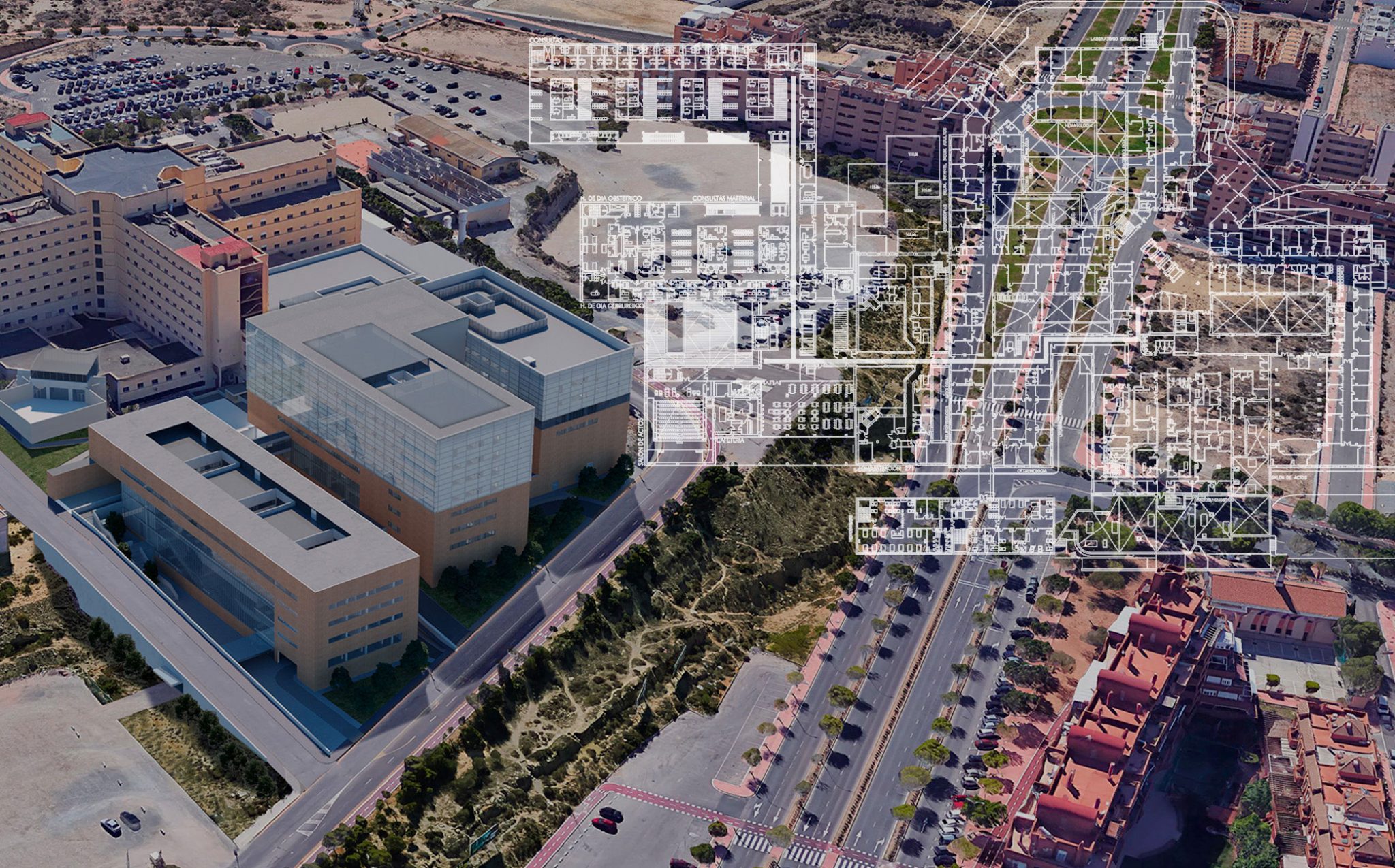
Medicine, research and technology evolve at a pace that hospital architecture cannot always match. When the hospital’s physical capacity has been exhausted, planning and functional organisation become essential tools for reinterpreting the building and guiding its future development.
The obsolescence of equipment and facilities, non-compliance with constantly changing regulations, and deterioration due to age often go hand in hand with the architectural and healthcare collapse of a hospital. However, even modern buildings may, after only a few years, begin to show certain tensions caused by the lack of a planned response aligned with the hospital’s actual healthcare needs. This gives rise to short-lived solutions and uncontrolled growth that ultimately blur the hospital’s own architecture.
The instrument that defines the hospital’s long-term roadmap is the Master Plan: a document that establishes how, when and which actions will be implemented in the future. It focuses on growth forecasts, the structure of circulation flows, the zoning of areas, the execution phases of the various works required to ensure that healthcare activity is never interrupted, volumetric integration, the engineering project, and regulatory and urban planning compliance.
