



La Línea de Concepción, Spain
La Línea is a unique place. Strongly marked by its border character, between the Strait and the Rock, its urban planning derives from its origins as a dormitory town and supply centre for Gibraltar. The hospital is located on the northern edge of the city. This border condition led us to consider that the hospital could become an element capable of stitching together the fragmented existing fabric with the edge of the city. For this reason, La Línea Hospital is a building with a strong urban vocation. The connection between the street and the lobby is a gradient that naturally blurs the transition from the scale of the city to the healthcare scale of the hospital. This gradient culminates in a large square that reinforces the image of the hospital as a narrative element within the urban fabric of any city.
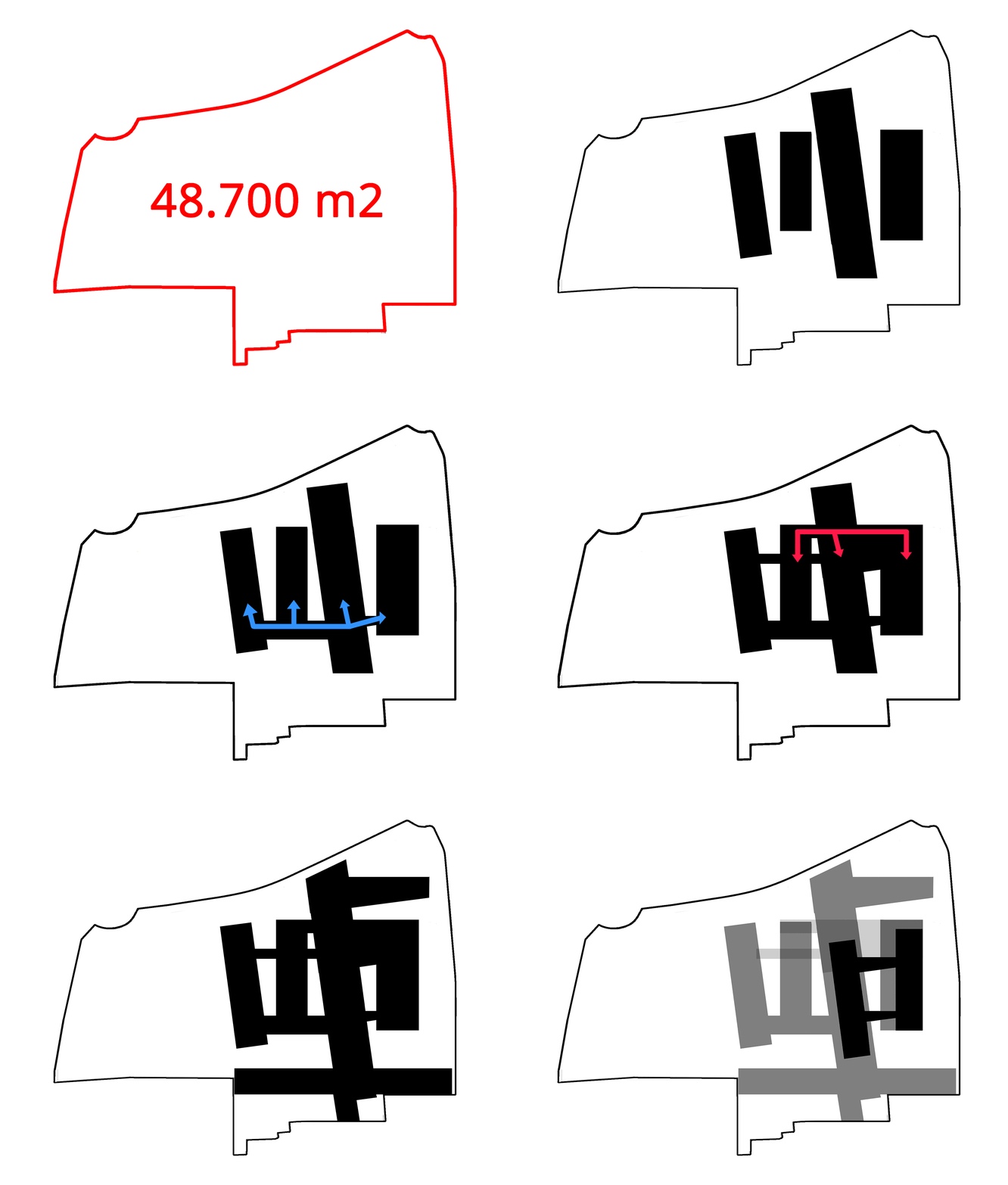
Faithful to the honest criteria imposed by functionality and the hierarchical communication scheme, we allowed ourselves to be guided by them until they naturally led to an architectural configuration in which a coherent volumetric interplay becomes the key asset for bringing rationality and beauty to the project. The areas are grouped according to their interrelationship needs. The hospital is structured by a large technical-clinical block to the north and by the element comprising the corridor and lobby for outpatients and visitors to the south. Between them, four transverse blocks are arranged, directly accessible from the lobby. The towers correspond to seven inpatient units. The spaces generated by the different layouts create places with the necessary polyvalent character, acting as transitional elements between areas or visual pauses that also serve as orientational landmarks.
The treatment of the envelopes, mainly exposed to east-west orientations, is of particular importance. The façade is ventilated with natural stone (grey sandstone), anchored with an aluminium substructure suitable for the aggressive marine environment. External thermal insulation is continuous throughout the façade, preventing the possibility of thermal bridges. The exterior joinery is made of aluminium with thermal break, using a concealed sash system and thermo-acoustic glazing with solar control. In areas at risk of impact, the inner pane is replaced with safety glass.
Photography: Alejandro González
