



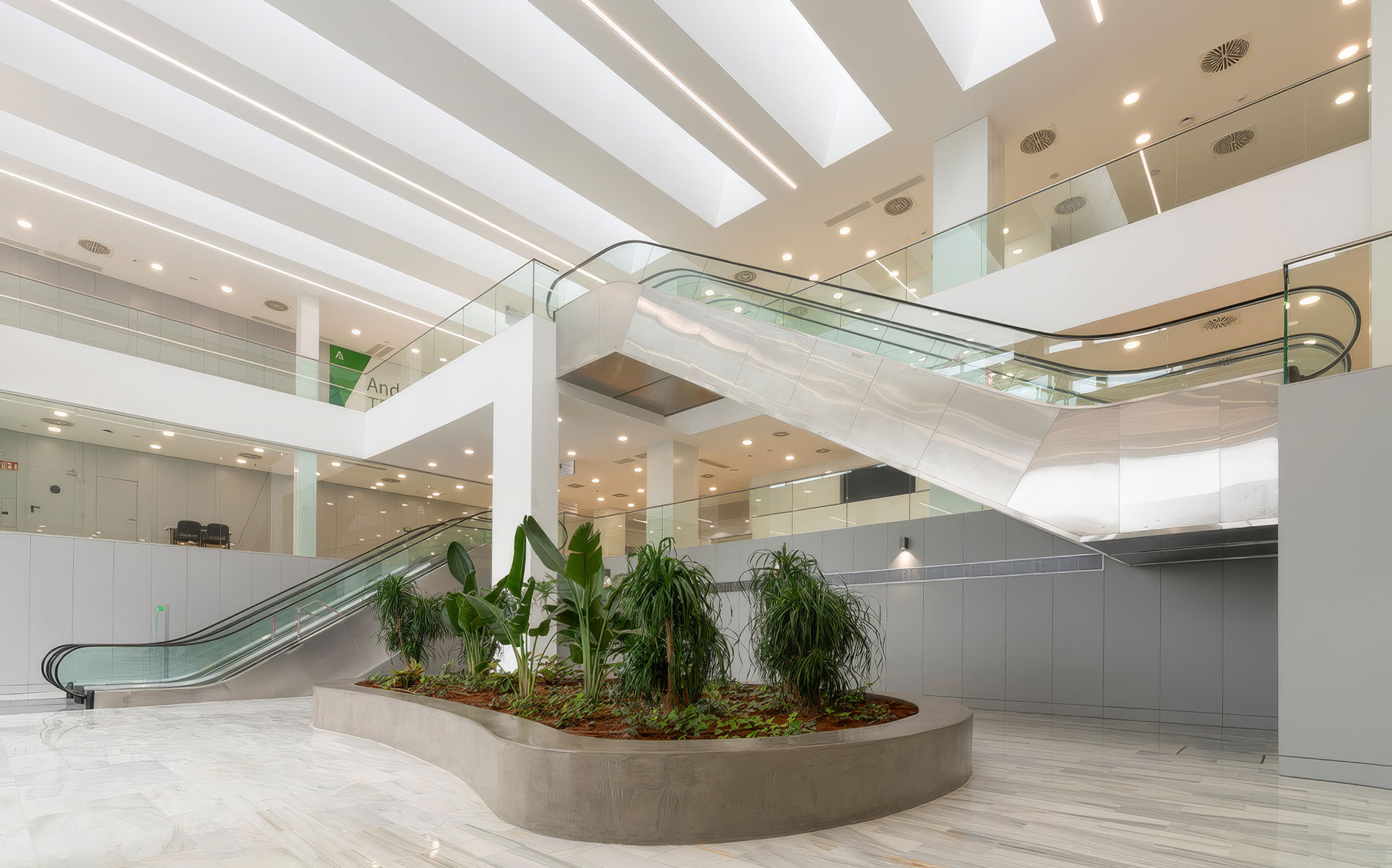
Planho goes beyond the functional, technical and logistical definition of the hospital. Through the design of interior spaces and the integration of medical equipment, the aim is to ensure that users experience the highest levels of comfort and quality within the space. In hospital architecture, interior design cannot be limited to a visually well-designed, integrated and orderly environment; it must also embrace the sensory dimension and the important role of factors such as appropriate ventilation and lighting (both natural and artificial), hygrothermal and acoustic comfort, as well as cleanliness and hygiene, which are closely linked to safety against potential infections. All these concepts are closely connected to engineering, which is why the balance between these two disciplines — hospital architecture and engineering — finds its clearest expression in interior design.
Aspects such as integration with nature, contact with outdoor space, the pursuit of long views towards the landscape, the use of colour in simple materials, and the interplay of forms and volumes that allows people to find their way intuitively through the hospital can all serve as vehicles for conveying positive emotions and pleasant sensations. These are guiding principles around which we shape our work, and principles that will continue to lead us in the pursuit of an architecture by and for the user, understood as the centre of the system.
